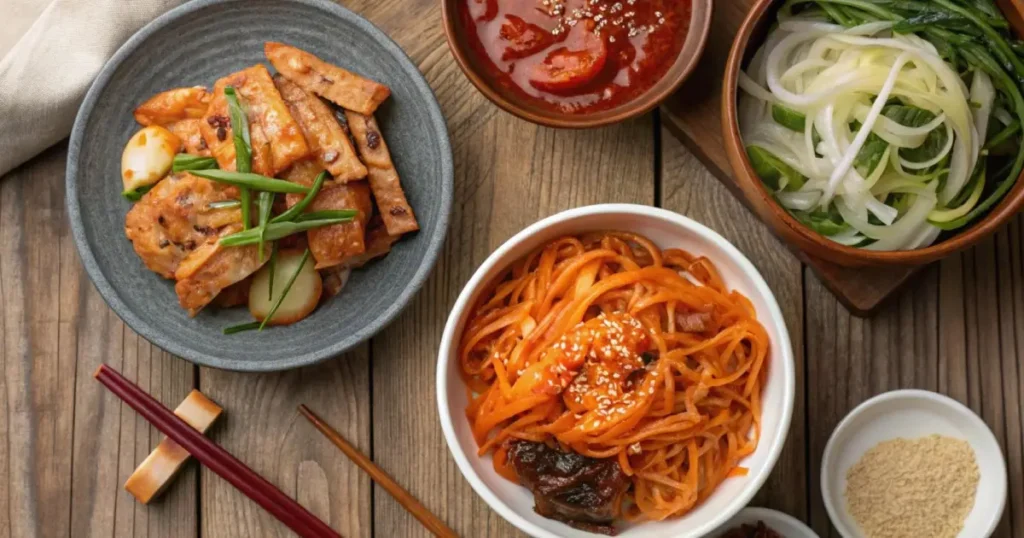
Korean meals are known for their variety, balance, and rich flavours. One of the most unique parts of Korean dining is banchan (반찬) — a selection of small side dishes served with the main meal. These dishes are an important part of Korean food culture and are designed to be shared by everyone at the table.
When you visit a Korean restaurant, you will often see several small plates placed in the centre of the table before the main dish arrives. Each dish offers a different taste and texture, making the meal more enjoyable and balanced. From fresh vegetables to fermented favourites like kimchi, banchan helps turn a simple meal into a complete dining experience.
Why Banchan Is Important in Korean Dining?
Banchan is more than just small side dishes—it is an important part of Korean meals. Here’s why:
- Balances the meal: Banchan includes vegetables, fermented foods, and proteins, making the meal healthy and well-rounded.
- Encourages sharing: Banchan is placed in the middle of the table so everyone can try a bit, making meals more social and fun.
- Adds variety: Instead of just one main dish, diners can enjoy many flavours and textures in a single meal.
- Shows Korean hospitality: In many Korean restaurants, banchan is free and refillable. Offering extra dishes is a way to show care and respect for guests.
Even today, many gold coast asian restaurant locations serving Korean food keep this tradition, letting diners enjoy a true Korean dining experience.
So, What Is Banchan?
Banchan refers to small side dishes served with rice in Korean meals. Each person usually receives their own bowl of rice and soup, while the banchan dishes are shared among everyone at the table.
A traditional Korean meal often includes:
- Rice
- Soup or stew
- Kimchi
- Several banchan side dishes
These small dishes add flavour and variety to the meal and help complement larger dishes like grilled meat or stew.
The Tradition of Serving Multiple Side Dishes
In the past, the number of banchan served at a meal showed how special or important the meal was.
Koreans used a system called the Cheop system to count the number of side dishes.
For example:
- 3 Cheop – simple meals for everyday eating
- 5 Cheop – meals for small gatherings
- 7 or 9 Cheop – meals for honoured guests
- 12 Cheop – royal meals served to the king
During the Joseon Dynasty, the king’s table always had twelve different side dishes. Noble families had fewer dishes, depending on their rank and social status.
How Banchan Became Part of Korean Cuisine?
Banchan has been an important part of Korean food for hundreds of years.
Long ago, Buddhism influenced Korean society, and people ate very little meat. Because of this, they made many dishes using vegetables and grains.
Over time, cooks became very creative. They learned to ferment, pickle, steam, and season vegetables in different ways to make them tasty and long-lasting.
Even after meat became more common, these vegetable-based dishes stayed an important part of every Korean meal.
Why Are Banchan Free?
Many people are surprised to learn that in a Korean restaurant, banchan side dishes are often free and refillable.
This is part of Korean hospitality. Offering extra dishes shows care and respect for guests. It also reflects the Korean idea of “jeong (정)”, which is about creating warmth and strong bonds by sharing food with others.
In restaurants with cast-iron grills, banchan is especially helpful. It balances the rich taste of grilled meat with fresh vegetables and lighter dishes, making the meal more enjoyable.
The 6 Main Types of Banchan
Banchan dishes are prepared using different cooking methods. They are commonly grouped into six main categories.
1. Kimchi – Fermented Dishes
Kimchi is the most well-known Korean side dish. It is usually made with fermented cabbage, chilli pepper, garlic, and salt.
For many Koreans, kimchi is an essential part of every meal.
2. Namul – Seasoned Vegetable Dishes
Namul dishes are made from vegetables that are steamed or blanched and then seasoned with sesame oil, garlic, soy sauce, or sesame seeds.
Examples include spinach and bean sprouts.
3. Bokkeum – Stir-Fried Dishes
Bokkeum dishes are quickly stir-fried with ingredients like soy sauce, garlic, and oil. These dishes are often savoury and rich in flavour.
4. Jorim – Braised Dishes
Jorim dishes are slowly simmered in a soy-based sauce so that the ingredients absorb deep flavours.
Common examples include braised potatoes and lotus root.
5. Jeon – Pan-Fried Dishes
Jeon are Korean-style savoury pancakes made by coating ingredients in flour and egg before frying them in a pan.
They are crispy on the outside and soft inside.
6. Muchim – Mixed or Marinated Dishes
Muchim dishes are vegetables or seafood mixed with seasonings such as chilli flakes, garlic, sesame oil, and vinegar.
Cucumber salad and spicy squid salad are popular examples.
Popular Banchan You May See
Some common banchan dishes often served in Korean meals include:
- Kimchi (Baechu Kimchi): A spicy fermented cabbage dish rich in flavour and probiotics.
- Kkakdugi (Radish Kimchi): Cubed radish kimchi has a crunchy texture and a slightly sweet taste.
- Spinach Namul: Blanched spinach mixed with sesame oil and garlic.
- Bean Sprout Salad: A light and crunchy side dish made with seasoned bean sprouts.
- Cucumber Salad: Fresh cucumber mixed with chilli flakes, garlic, and vinegar.
- Braised Potatoes (Gamja Jorim): Soft potatoes cooked in a sweet soy-based glaze.
- Egg Roll (Gyeran Mari): A rolled omelette sliced into small pieces.
- Pan-Fried Tofu: Crispy tofu served with a savoury dipping sauce.
- Japchae: Sweet potato glass noodles stir-fried with vegetables and sometimes beef.
The Role of Fermentation in Korean Food
Fermentation plays an important role in Korean cooking.
In the past, fermentation helped preserve food during cold winters when fresh vegetables were not available.
Vegetables could be stored and eaten for months without spoiling.
This process also produces beneficial bacteria that support digestion and overall health. Today, fermented foods like kimchi are widely studied for their health benefits.
Korean Food in Modern Dining
Korean food is loved by people all over the world. It is popular because it has lots of different flavours and dishes to try.
Some well-known Korean foods are:
- Korean fried chicken – crispy and tasty chicken
- Korean BBQ – meat cooked right at your table
- Bibimbap – rice mixed with vegetables, meat, and sauce
- Korean soups and stews – warm and comforting
One special dish is spicy Korean jjigae. This is a hot stew made with tofu, vegetables, seafood, or meat.
Most Korean meals also come with several banchan side dishes. Eating them all together makes the meal colourful, tasty, and complete.
Tips for Enjoying Banchan
If you are trying Korean food for the first time, these easy tips will help you enjoy banchan.
- Try a little of each dish: Banchan dishes are small, so you can taste many different foods during the meal.
- Share with everyone: Banchan is made for sharing. Take a small amount so others at the table can enjoy it too.
- Enjoy different flavours: Some dishes are spicy, some are salty, and some are a little sour or sweet. Try different flavours to enjoy the full meal.
- Eat it with your main food: Banchan tastes even better when you eat it with rice, BBQ, or soup. This makes the meal more tasty and complete.
To Sum Up
Banchan is a big reason why Korean meals feel special and different. These small side dishes bring many flavours, colours, and textures to the table. Some are spicy, some are fresh, and some are savoury. Together, they make the meal more fun and interesting. Sharing banchan also makes eating more social, as everyone at the table enjoys the dishes together.
If you want to try a real Korean dining experience, visit Yi Dynasty Korean BBQ Restaurant. Here you can enjoy sizzling cast iron grill Korean BBQ, warm and flavourful spicy Korean jjigae in Gold Coast, and crispy Korean fried chicken in Gold Coast. It’s a great place to enjoy delicious food with family and friends at a popular gold coast asian restaurant.
Your email address will not be published.